Solitaire for Seniors Game
- 4.9
- Rating
- 1.00M
- Installs
- Free
- Price
 Analysis by App-foxy
I opened Solitaire for Seniors Game expecting a familiar card pastime with a larger, calmer presentation, and that is exactly where its appeal begins. It is a free card game from Guru Puzzle Game, designed around the classic patience-style experience rather than a complicated collection of modes or a competitive multiplayer loop. The first few minutes feel immediately understandable: cards, spaces, deliberate moves, and enough time to think before committing to a decision.
That simplicity is not a weakness here. In my experience, it gives the game a clear identity. I can play for a short break, settle into a longer session, or use it as a quiet way to keep my attention occupied without learning a new ruleset. Its store summary presents it as a relaxing solitaire game for seniors, but I would not limit it only to older players. Anyone who prefers readable card play and an unhurried pace can find something comfortable in it.
The game is available at no upfront cost, carries an Everyone age rating, and has passed the point where a new release still feels untested. It has been available since January 13, 2023, and its current version is 5.3.1-25112176. Those details matter less than how it feels in the hand, but they help explain why the game comes across as an established, focused option rather than an experiment.
You May Also Like

 Blood Strike: 2.5 Anniversary
Blood Strike’s Loadouts Turn Every Drop Into a Tactical Gamble
A close look at Blood Strike’s custom loadouts: how fast access to signature weapons reshapes its battle royale rhythm, rewards preparation, and narrows the gap between fights.

 Pandora - Music & Podcasts
Pandora’s Music Is Easy to Start, but Harder to Recover
Pandora’s strength is its low-effort path from a seed to a station. Its weak spot is how much confidence it asks you to place in connection, setup, and quiet recovery.

 8 Ball Pool
 Is Built on Rivalries, Rematches, and Routine
A close look at the rivalries, rematches, shared routines, and unanswered safety questions that turn a quick pool match into a persistent mobile community.

 Samsung Music
’s Quiet Strength Is Playing What You Already Own
Its reach comes less from spectacle than from dependable access to a personal library. That simplicity is both the app’s strongest retention engine and its ceiling.

 AccuWeather: Weather Radar
AccuWeather Review: A Quick, Clear Forecast for Everyday Decisions
For everyday plans, the best forecast is the one you can understand quickly. AccuWeather makes rain timing, radar, and local conditions easy to act on, with a few trade-offs.

 Hill Climb Racing
Why Hill Climb Racing Still Turns Crashes Into One More Run
A tiny car, a bumpy hill and one more upgrade: Hill Climb Racing keeps resurfacing because its simple chaos makes every near-miss feel personal.
More From Our News Desk



A calm card table built for easy reading
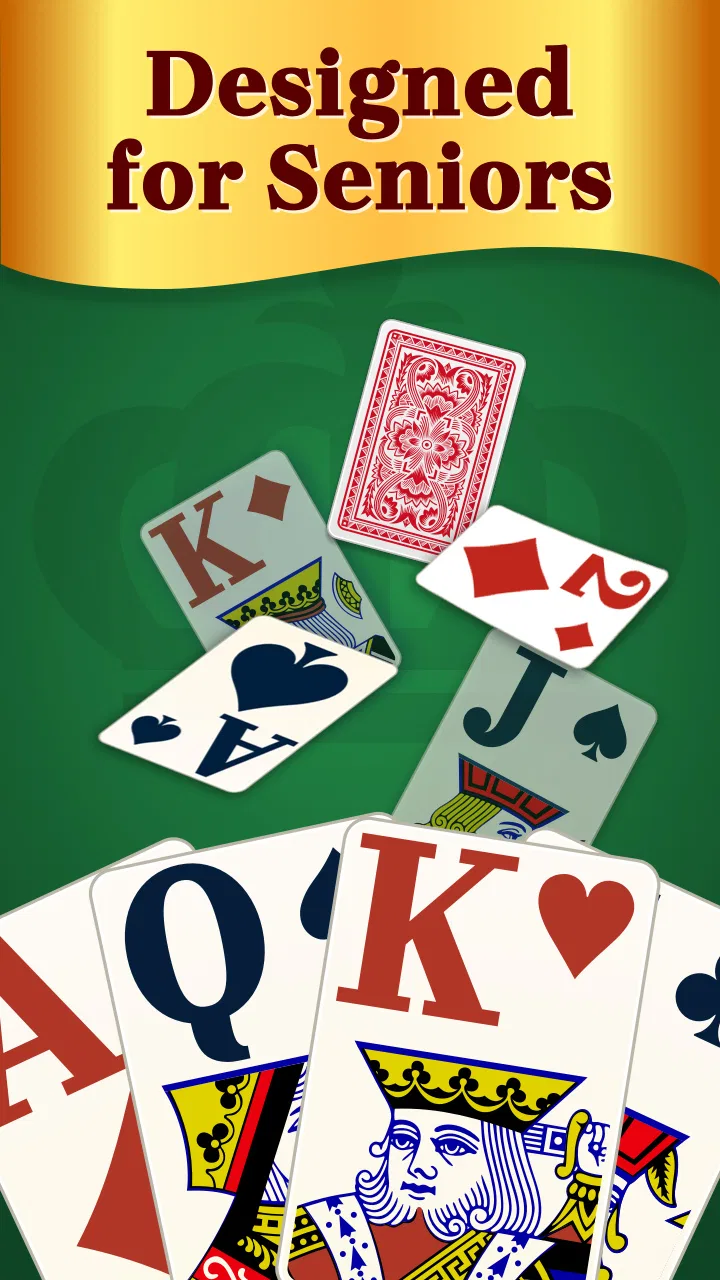
The visual direction is the first thing I notice during play. Solitaire is not a game that needs a dramatic fantasy world, and this title wisely treats the card table as its setting. The important “world language” is visual clarity: the cards are the environment, the layout is the scene, and every change on the table should help me understand what can happen next.
That approach suits the intended audience. A busy interface would work against the relaxing promise, while a tiny or overly decorative card layout would make ordinary moves tiring. Here, the experience is best understood as a digital table arranged for repeated, comfortable reading. The presentation keeps my attention on suits, ranks, empty spaces, and the gradual construction of piles instead of asking me to interpret unnecessary visual information.
I also like the way a card game can create a sense of place without inventing a fictional setting. The table becomes a small private corner: a few minutes before bed, a pause after lunch, or a familiar routine while waiting for an appointment. That is a more honest kind of atmosphere than adding elaborate scenery that has no connection to the mechanics.
For seniors and players with less patience for clutter, this matters more than visual novelty. The game’s central promise is not that it will surprise me with a new universe. It is that I can recognize the play area quickly and return to it without friction. That makes the art direction functional, but not cold. The cards provide enough structure to make each session feel intentional.
Why the presentation works better for some players than others
I would recommend this presentation to someone who values legibility over spectacle. If you want a colorful card game filled with animated characters, story chapters, or a strong sense of progression outside the table itself, this will probably feel restrained. The same restraint that makes it approachable can also make it seem plain to players who need constant visual rewards.
That trade-off is important. A quiet design helps me concentrate, especially when I am playing one-handed or checking the game in a bright room. It also means the title does not disguise the fact that its pleasure comes from the card arrangement itself. There is no need to wait for the “real” game to begin; the table is the whole point.
A practical tip is to treat the game as a visual routine rather than a challenge to rush through. I get more from it when I scan the entire layout before moving anything. Looking first for blocked cards, available spaces, and sequences that can be opened prevents impulsive taps and makes the board feel more like a small puzzle than a reflex test.
The language of cards, space, and attention
Solitaire communicates through familiar symbols. A red or black suit, a visible rank, and the order of a pile are enough to tell me what is possible. That makes the game approachable even if I have not played a digital version recently. I do not need to understand a fictional setting, follow dialogue, or remember a long tutorial. The visual grammar is already known.
For a senior player, that familiarity can reduce the mental cost of starting a session. For a younger player, it makes the game a useful low-pressure alternative to more demanding card apps. I can pick it up after a long day and spend my attention on planning rather than decoding the interface.
The strongest design choice is therefore not a particular decoration but the decision to let the cards speak clearly. When a game is built around a standard solitaire structure, every extra element has to justify its presence. In this case, a calmer visual language supports the intended mood better than a louder one would.
Sound, rhythm, and the pleasure of taking time
Solitaire is naturally a quiet game, and that shapes how I judge its sound and pacing. The important rhythm comes from the sequence of small decisions: reveal a card, move a stack, open a space, reconsider the order, and wait for the next useful possibility. The game does not need constant action to hold attention. Its rhythm comes from thought followed by a small visual result.
That makes it a good companion for moments when I do not want an aggressive soundtrack or a stream of alerts competing for attention. I can play while winding down, during a short rest, or when I want an activity that occupies my hands without demanding total emotional investment. The mood is created by restraint: the table stays the focus, and the pace allows a player to pause.
I find that especially useful when playing on a phone rather than a larger screen. Mobile sessions are often interrupted, so a card game that does not punish every pause is more practical than an action game built around continuous timing. I can think through a move, put the phone down, and return with the same basic mental context.
There is also a subtle difference between relaxing and being passive. Good solitaire still asks me to notice patterns and manage risk. The slow rhythm gives those decisions room to breathe. I am not simply watching cards move; I am deciding whether a short-term improvement will damage the next sequence, or whether revealing one card is worth giving up a more flexible arrangement.
A realistic everyday session
Imagine finishing a busy morning and having ten minutes before the next task. I would open the game, play without preparing a long session, and use the first scan of the table to settle my attention. If the board becomes awkward, I can stop without feeling that I have abandoned a story or let a team down. If the layout starts to open, the gradual progress gives me a satisfying reason to continue.
That scenario shows where the game fits best: small, repeatable breaks. It is not trying to replace a full evening of entertainment for everyone. Instead, it works as a dependable pocket activity. The lack of a demanding narrative is an advantage when I want to return to the same basic experience many times.
Players should still be aware that repetition is part of the design. The same familiar structure that makes the game comforting can become predictable. If I need new rules, dramatic stakes, or a strong sense of discovery, a more varied card title may serve me better.
How the mechanics support the intended audience
The mechanics fit the mood because solitaire rewards observation rather than speed. I can examine the visible options, decide which move creates the most useful opening, and accept that some boards will require patience. That is a better match for the senior-focused presentation than a system built around rapid taps or complicated combinations.
One useful habit is to avoid moving a card simply because the move is available. I first ask what the move reveals and whether it creates a better sequence. A move that opens a hidden card is often more valuable than one that merely makes the table look tidier. This small change in thinking turns a casual pastime into a more satisfying planning exercise.
Another practical approach is to protect flexibility. Empty spaces and movable sequences can be more valuable than an immediate placement, so I try not to fill every useful opening without considering what I may need next. This is the kind of insight that does not appear in a short store description, but it makes repeated sessions feel less random and more deliberate.
I also recommend playing with a stopping point in mind. Because the game is easy to restart, it can quietly extend a short break into a much longer one. For someone using it as a relaxing routine, deciding in advance to play one board or stop after a natural pause keeps the experience refreshing rather than turning it into background scrolling.
Where it improves on ordinary alternatives
Compared with a physical deck, the app removes setup, shuffling, and the need for a clear table. That makes it more convenient for a chair, a waiting room, or a small bedside space. The trade-off is that the tactile feeling of handling real cards is gone. If you enjoy physically dealing a deck, this digital version cannot fully reproduce that ritual.
Compared with a general solitaire app packed with many variants, this game is easier to approach because its identity is narrower. I do not have to browse a large menu before playing. That focus can be reassuring for someone who wants a familiar activity, though a player who enjoys experimenting with different rules may find the selection less exciting.
Compared with competitive card games, it is far less stressful. There is no need to react to another person’s strategy or keep up with a timer-driven match. That makes it suitable for relaxation and gentle concentration. On the other hand, players seeking social interaction, ranked play, or a strong sense of victory over an opponent should look elsewhere.
The free entry point is helpful for trying the experience without commitment. In-app purchases cost $6.99 per item, so I would pay attention to any optional purchase prompts and decide whether they add enough value to my own routine. The game works best for me when I judge it as a simple card pastime, not as something that must be expanded with every available extra.
Who should choose it, and who should skip it
I think it is a strong fit for seniors who want a familiar card activity, for casual players who prefer readable layouts, and for anyone looking for a calm mobile game that can be played in short sessions. Its Everyone rating also makes it a reasonable choice for a broad household audience, provided each player is comfortable with the basic solitaire format.
I would be more cautious about recommending it to someone who wants a deep strategic card system, frequent novelty, online competition, or a narrative campaign. The game’s strength is consistency, not variety. It is also not the best choice if you dislike repeating a recognizable structure or if the main appeal of card games for you is the physical deck itself.
Device compatibility is fairly broad: it requires Android 6.0 or later. That makes it accessible on many older Android devices, although the actual comfort of play will still depend on the phone’s screen size and responsiveness. On a smaller display, I would take extra care with card selection and avoid rushing, since precision matters more when the table feels compact.
My atmosphere verdict after settling into the table
What stays with me is the coherence between the art direction, the soundless-feeling calm of the activity, and the measured mechanical rhythm. Solitaire for Seniors Game does not need a fictional world to create a mood. Its world is a clear card table, its language is the arrangement of suits and ranks, and its pacing comes from giving each decision enough space.
Guru Puzzle Game has chosen a sensible direction for a title aimed at relaxed, accessible play. The result is not a reinvention of solitaire, and I would not buy it expecting one. Instead, it is a focused version of a familiar pastime that makes the most sense when I want something steady, readable, and easy to return to.
The audience response is strong, with a 4.9 average from around 76 thousand ratings, and the game has passed over a million installs. Those figures do not replace personal preference, but they fit my impression that the title has found a clear audience. It knows what kind of experience it is offering and generally avoids distracting from it.
My final recommendation is simple: try it if your ideal mobile game is a quiet card table in your pocket. Give it a chance if you want a few thoughtful minutes rather than a burst of stimulation, and use the whole layout as a planning problem instead of tapping the first legal move. Skip it if you need constant variety, social competition, or a richer audiovisual world.
The best reason to play it is not novelty but comfort: the familiar rules, gentle rhythm, and focused presentation make it easy to build into an everyday routine. For me, that is enough to recommend it to a friend who wants a dependable solitaire game rather than a crowded card-game collection.
FAQs for Solitaire for Seniors Game
01Is Solitaire for Seniors easy to use?
Yes, Solitaire for Seniors is designed with simplicity and ease of use in mind. The interface features large buttons and clear instructions, making it accessible for seniors. The game also includes a tutorial mode to help new players learn the ropes without feeling overwhelmed.
02What special features does Solitaire for Seniors offer?
This app includes features tailored for seniors, such as adjustable difficulty levels, a zoom function for better visibility, and a hint system to guide players when they're stuck. It also offers relaxing background music and customizable themes to enhance the gaming experience.
03Is Solitaire for Seniors free to play?
The game is free to download and play, but it may include optional in-app purchases. These purchases can enhance the gameplay experience by offering additional themes or removing ads. However, all core features of the game are accessible without spending any money.
04Can I play Solitaire for Seniors offline?
Yes, Solitaire for Seniors can be played offline, making it a great option for those who want to enjoy the game without an internet connection. This feature ensures that players can enjoy uninterrupted gameplay anytime, anywhere.
05Is Solitaire for Seniors available on both Android and iOS?
Currently, Solitaire for Seniors is available on both Android and iOS platforms, ensuring a wide range of compatibility. Users can download the app from the Google Play Store or the Apple App Store, depending on their device, to enjoy the game.
Pros
- Large
- easy-to-read cards for better visibility.
- Simple interface tailored for senior users.
- No time limits
- allowing relaxed gameplay.
- Hints and tutorials available for beginners.
- Offline play mode supports no internet usage.
Cons
- Limited customization options for card designs.
- In-app ads can be intrusive at times.
- No multiplayer feature available.
- Limited variety of solitaire game modes.
- Requires frequent updates for optimal performance.

Solitaire for Seniors Game
Gallery